MAGNIFY
The loupe comes first
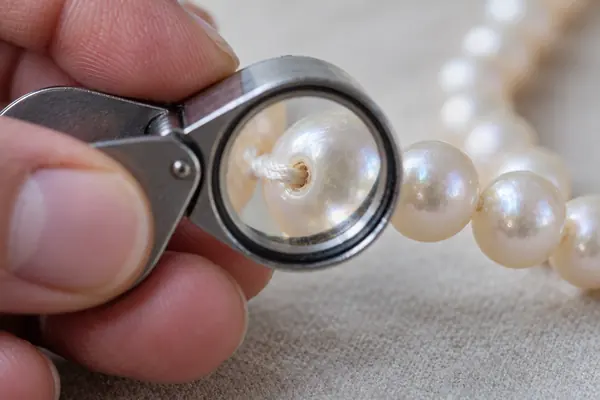
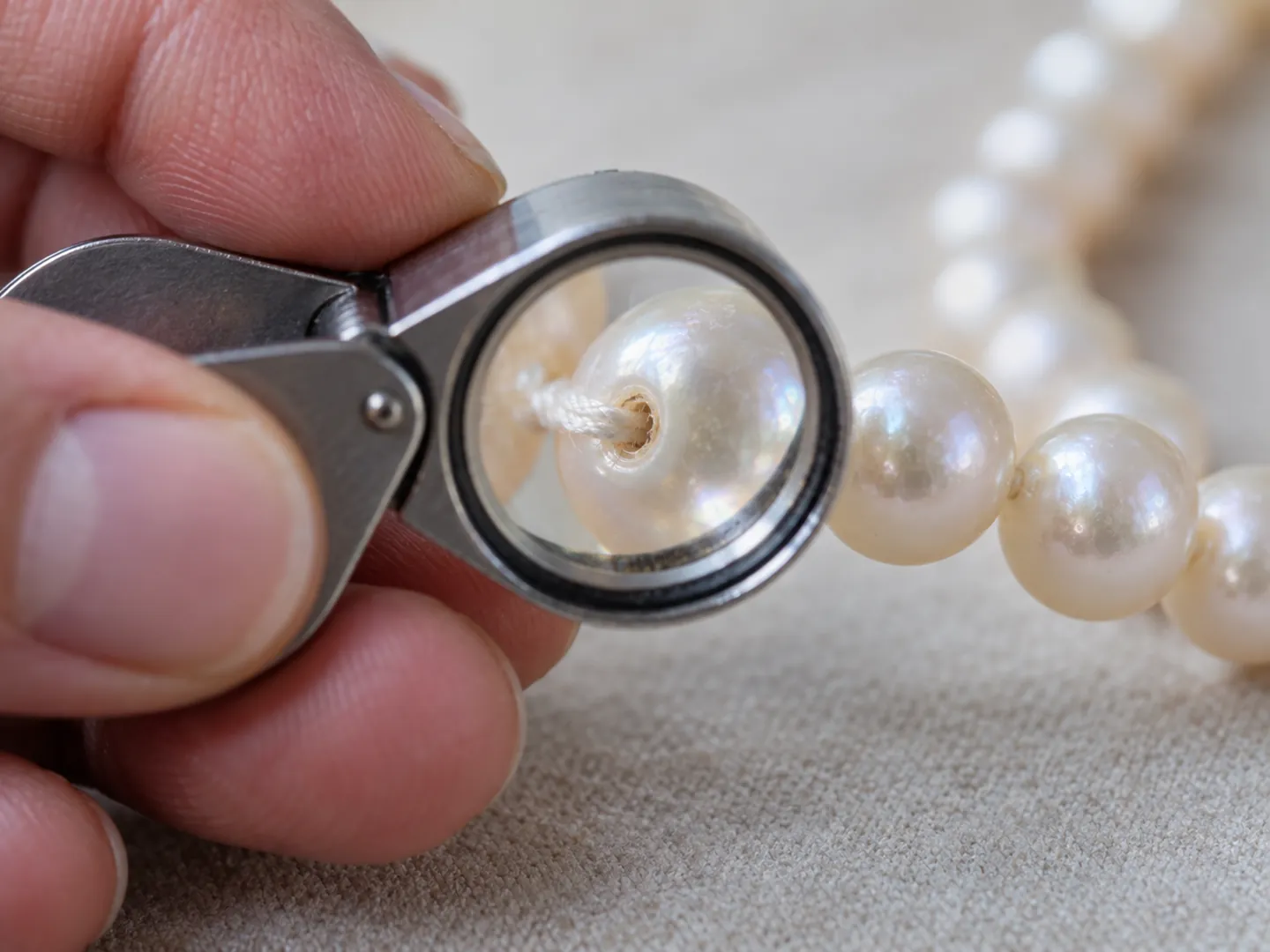
Under 10x magnification, imitation pearls show a grainy, glittery, speckled surface. Gemmologist Renée Newman calls magnification the most reliable way to spot them.
Compare the tests jeweltapper
WHAT GEMMOLOGISTS CHECK
Grandmother's strand, a market find, a gift.
Pick a test
LOOK CLOSERwith a 10x loupe
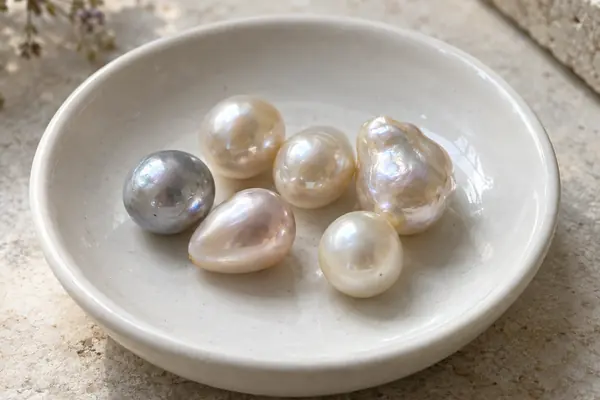
Imitation pearls are glass, plastic or shell beads with a shiny coating. Gemmologists say they are easier to spot than most fake gems, if you know where to look: the surface, the drill holes and the way the colours sit.
Updated
THE SHORT ANSWER
Imitations are coated beads.
Real pearls are layers of nacre, and it shows.
MAGNIFY
Under 10x magnification, imitation pearls show a grainy, glittery, speckled surface. Gemmologist Renée Newman calls magnification the most reliable way to spot them.
Compare the testsVARIETY
Real pearls carry small pits and welts, and their overtones vary along a strand. Beads that match exactly in shape, size and colour are a warning sign.
Check a strandTHE LAB
No home test can tell a natural pearl from a cultured one. GIA uses X-radiography to see the pearl's inner structure and settle the question.
See the numbersA QUICK TEST GUIDE
Pick a test to see what it can show and how far to trust it. The bar shows how reliable gemmologists consider it for spotting imitations.
Based on GIA and a gemmologist's guide to pearl imitations. For valuable or inherited pieces, ask a qualified gemmologist or a gem laboratory.
TWO NUMBERS WORTH KNOWING
One figure on why pearls need care,
one on how well a fake can hide.
2.5 Mohs
Pearl on the Mohs scale
GIA ranks pearl at 2.5 on the Mohs hardness scale, which means it is very soft and easily scratched or abraded. Store pearls apart from harder jewellery.
HARDNESS · GIA
≈ 9,360
Pearls tested to find one imitation
GIA's Mumbai laboratory tested 18 strands holding about 9,360 pearls. One tiny bead turned out to be an imitation, picked out by its blue reaction under X-ray and an unusually large drill hole.
ONE IN A STRAND · GIA LAB
GIA's lab note (Gems & Gemology, Summer 2025) says common imitations use solid or hollow glass, plastic or shell beads coated with a 'pearl essence' that copies nacre's iridescence.
FOUR CHECKS TO TRY
These checks need only good light and a 10x loupe. Use several together: gemmologists warn that no single home test is foolproof.
A grainy, glittery, speckled surface points to a coated imitation. Real pearls look smoother at this magnification.
Look for sharp, clean edges. A ragged coating or rounded ridges around the hole suggest an imitation.
Pits, welts and slight differences between pearls are normal for real pearls. Perfect sameness is a warning sign.
On good real pearls, soft pink or green overtones vary along the strand. Imitations tend to look the same all the way round.
LOOKING AFTER PEARLS
GIA says pearls can be damaged by many chemicals and all acids, including hair spray, perfume, cosmetics and even perspiration. High heat can burn, discolour, split or crack them.
Never clean pearls in an ultrasonic or steam cleaner. GIA suggests wiping them with a very soft, clean cloth after each wearing, warm soapy water for an occasional thorough clean, and letting a strung necklace dry completely before wearing it.
Questions
Often, but not always. Real pearls usually feel gritty against the edge of a front tooth and imitations smooth, yet some real pearls are polished smooth and some imitation coatings are made to feel gritty. Magnification is more reliable.
GIA says common imitations use solid or hollow glass, plastic or shell beads coated with a 'pearl essence' substance that copies the iridescence of nacre.
Natural pearls form in a mollusc without any human help. Cultured pearls grow after a technician inserts a shell bead and mantle tissue, or tissue alone, into a host mollusc.
No. GIA uses X-radiography, with visual observation and other advanced equipment, to see a pearl's inner structure and decide whether it is natural or cultured.
Wipe them with a very soft, clean cloth after wearing. For an occasional thorough clean GIA says warm, soapy water is safe, but never use an ultrasonic or steam cleaner.
ABOUT THIS NAME
jeweltapper.com is part of the DoodleSale portfolio. It isn't in an auction right now, but you can ask about leasing it.